

How do you get clean rain recordings without the sound of water drops hitting the blimp? This is a question I receive quite often so I decided to make a video about it. This is not the whole picture though. There are important considerations about protecting the mics and recorders from humidity that I will briefly mention further down and hopefully touch on in a future video/blog post.
I’ve tried a lot of options before I realized they were never good enough. Things like hogs hair, Cinela Kelly, Rycote Duck, leaving mics under trees, they work to some extent but they’re not perfect. What I want is to completely avoid the thump sound that raindrops make when hitting the blimp. That goes for rain falling on metal tripods or plasticky dry bags too.
The only thing I want to record is rain falling on natural surfaces like leaves, wood, dirt, puddles, undergrowth etc. When I think about it this way, the solution becomes obvious: build a small roof over the microphone out of material that sounds like the environment. While not as easy as I first imagined, I had an excellent teacher so I learned how to do it quite fast. Check out the video for more details.
Rain clouds over the Congo rainforest
It goes without saying that I have to be somewhere far away from traffic, aircraft noise, people, farm animals etc. Places like cloud forests or rainforests are perfect, but woodlands and forests in tropical or temperate areas can also work.
One other thing to keep in mind is that generally microphones and water don’t work well with one another. Even my kit (Sennheiser MKH30 and MKH8040 microphones mainly) that has carefully been selected for its sturdiness and resistance to humidity occasionally suffers on long trips to rainforests. Therefore I use a blimp that can be rendered waterproof with the help of Nikwax spray. I also use sturdy dry bags (not ziploc bags) to keep my recorders dry when they’re in the field.
One thing that’s arguably worse for electronics is salty sea water. That will seep in and corrode even the best weather-sealed gear, so keep your precious kit away from it. I can afford to put small handhelds and lav mics to various tests, but if you only have one rig I’d advise against it. Hope this helps but feel free to ask questions if there’s something I missed.
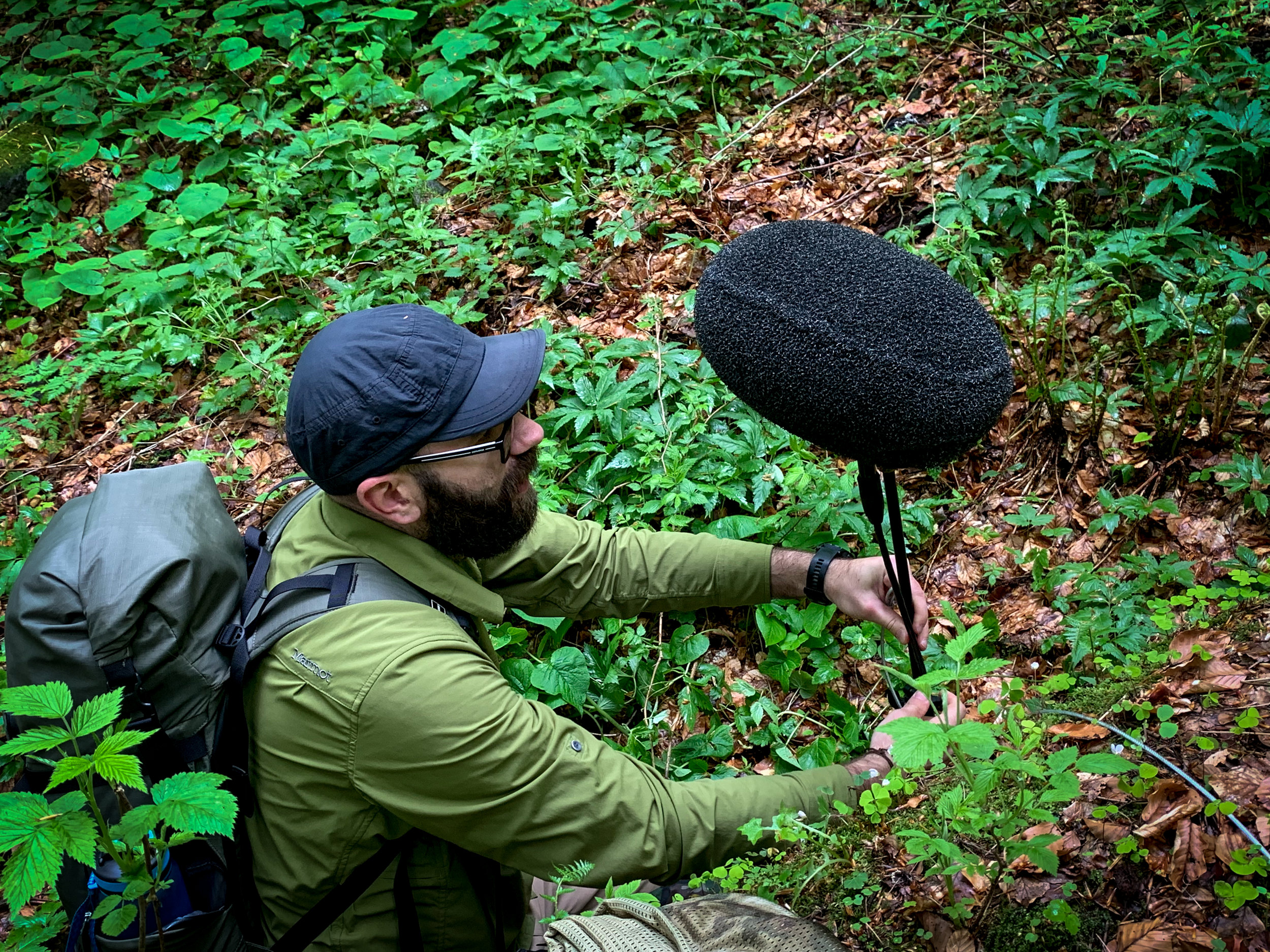
Field recording surround ambiences in Transylvania
You may have noticed that I mentioned my Patreon page in the video. I decided to dedicate more time to video production but that means I will have to give up something else, mainly some paid freelance gigs. For this to work I will need a lot of support. Buying my libraries and albums is a great way to do that, supporting me directly on Patreon is another one.
You’re also encouraged to like, share, subscribe and generally be friendly on social media since this will help with discoverability. Your help is greatly appreciated and will encourage me to post more and more content. Dieuredieuf!